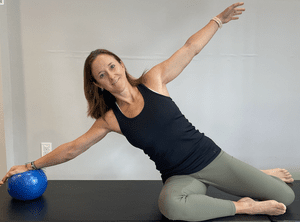
Teen Stretching & Mobility: Why Movement Matters During the Growing Years
A thoughtful approach to flexibility, mobility, strength, and body awareness for teens
The teenage years are full of change.
Bodies are growing, coordination is developing, sports and activities place new demands on the body, and teens are often spending long hours sitting at school, studying, or looking at screens.
Movement can be a valuable way to help teens become more aware of their bodies and develop the mobility, strength, coordination, and confidence they need to move well.
At The Mind Body Union, teen movement sessions are designed to be approachable, age-appropriate, and personalized to the individual—not focused on how a teenager looks or how flexible they are.
Why mobility matters for teens
During adolescence, the body is constantly changing.
Growth can sometimes make movement feel unfamiliar. A teenager who was naturally coordinated or flexible a year ago may suddenly feel tight, awkward, or less comfortable in certain movements.
That's normal.
Rather than focusing on achieving a particular level of flexibility, teen mobility sessions encourage young people to understand how their bodies move and develop control within that movement.
This can include:
Flexibility and mobility
Balance and coordination
Core and overall strength
Postural awareness
Body awareness
Movement confidence
The goal isn't to make teens bend further or stretch harder.
It's to help them feel more comfortable and confident in their bodies.
Stretching isn't the whole story
When people hear “stretching,” they often picture sitting on the floor and holding a position.
Stretching can certainly be part of a movement practice, but mobility is broader.
Mobility is about having the ability to move a joint through an appropriate range of motion with control.
That means we can combine mobility work with strength, stability, balance, and coordination.
For a teenager, that might mean exploring how the hips move, developing shoulder mobility, improving spinal movement, or working on balance and control.
Every teen is different, so the focus depends on their body, activities, and goals.
For young athletes
Teenagers who participate in sports place additional demands on their growing bodies.
A soccer player may need mobility and stability through the hips and legs. A lacrosse player may benefit from developing strength, rotation, coordination, and control. A dancer may have different mobility needs altogether.
Pilates-based movement can complement sports training by giving teens an opportunity to work on qualities that may not always be the focus of their regular practice.
The goal isn't to replace their sport or traditional strength training.
It's another way to build a well-rounded movement foundation.
A positive relationship with movement
For teenagers, how we talk about movement matters.
I don't want sessions to be about changing how a teen looks, burning calories, or fixing something that is “wrong” with their body.
Instead, we can focus on what their bodies can do.
Can you balance a little longer?
Can you move with more control?
Can you understand where you feel tight?
Can you find more stability?
Can you feel stronger?
These are skills that can help develop confidence both inside and outside the studio.
What does a teen session look like?
There isn't one set routine.
A session might include Pilates equipment, stretching, mobility exercises, balance work, core strengthening, or movement patterns that relate to a teen's sport or daily activities.
Sessions are adapted to their age, experience, interests, and goals.
For a teen who is completely new to Pilates, we'll start with the basics and become familiar with the equipment and movements.
For a young athlete, sessions can be more targeted toward the demands of their sport.
And for a teen who simply wants to feel less stiff or more comfortable in their body, we can focus on mobility, awareness, and movement quality.
Each session can accommodate 4 teens in the studio. Each person will work on rotational exercises, with all equipment where necessary.
A space where teens can move without pressure
I think this is one of the most important parts of working with teenagers.
There is no competition.
No keeping up with a class.
No expectation that they need to already be strong, flexible, or athletic.
Just an opportunity to move, learn, and develop a better understanding of their own body.
As a mum of two teenagers myself, I know how much is happening during these years. My goal is to create a space where teens feel comfortable asking questions, trying something new, and developing a positive relationship with movement.
Teen movement at The Mind Body Union
Teen sessions at The Mind Body Union can be a great fit for young people who want to:
Improve flexibility and mobility
Develop strength and stability
Improve balance and coordination
Support their sports training
Feel more comfortable in their changing bodies
Develop greater body awareness
Build confidence in movement
Simply spend some time moving and stretching
Whether your teen is highly athletic, just getting started with movement, or somewhere in between, sessions can be adapted to meet them where they are.
Movement is a skill that can grow with them.
Ready to get started?
Explore Teen Movement & Mobility at The Mind Body Union or get in touch to find the right session for your teen.